
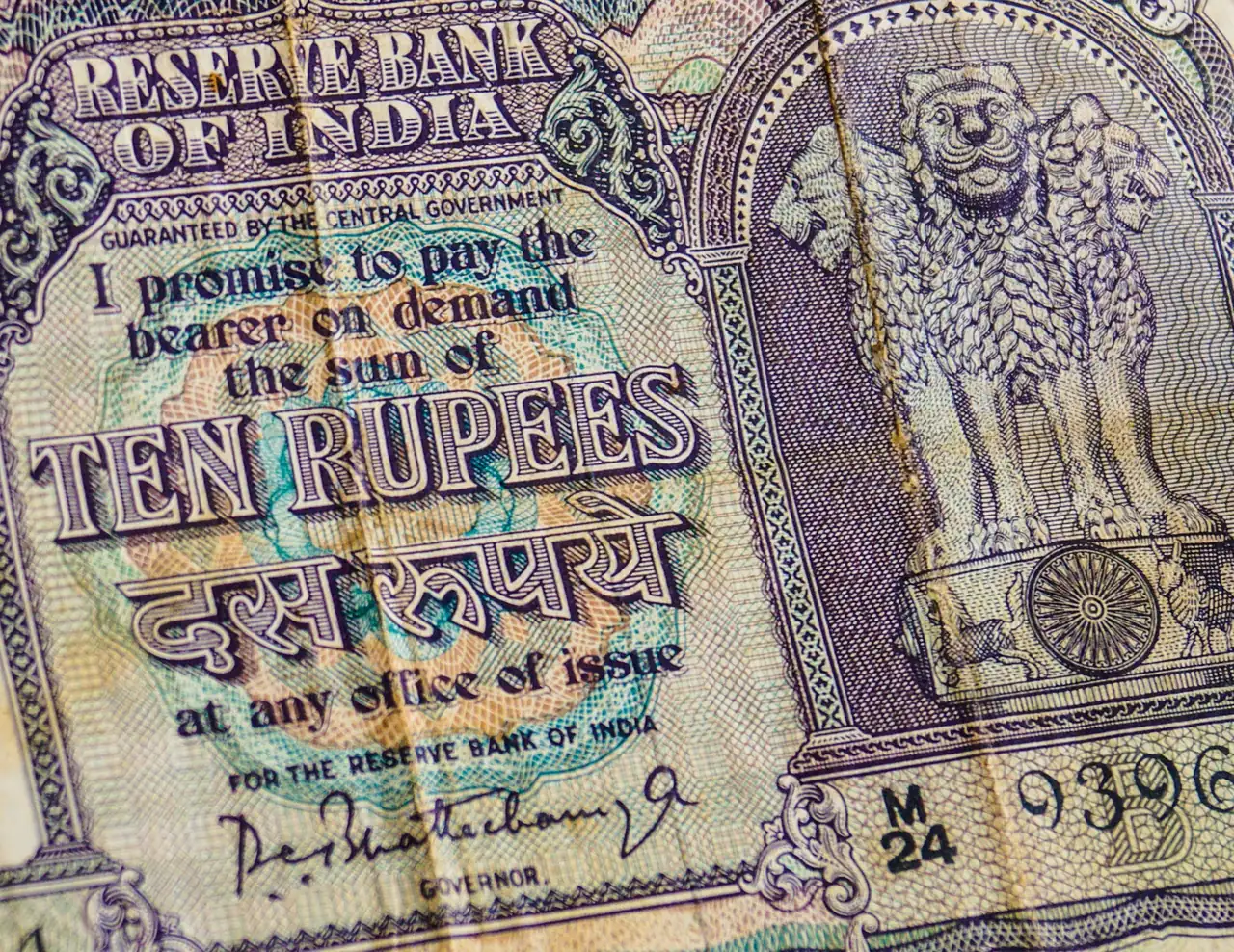
RBI's relaxation on NRE and FCNR(B) deposit rates ended on 31 August 2026, a month early. If you booked a fresh or renewed FCNR(B) deposit of three to five years, or an NRE deposit of three years or more, between 17 June 2026 and 31 August 2026, your bank could quote a rate above the usual ceiling. Book one now, and the normal caps apply again. Your tax on the interest hasn't changed.
What changed
In June 2026, RBI temporarily let banks pay more than the usual ceiling on two kinds of deposit: FCNR(B) deposits of three to five years, and NRE deposits of three years or more, including deposits renewed on maturity. The relaxation was due to run to 30 September. On 25 August 2026, RBI cut it short, moving the end date forward to 31 August 2026 with immediate effect, for every kind of bank.
- When the relaxation was due to endAnnounced in June30 September 2026From 25 August 202631 August 2026, a month sooner
- FCNR(B) deposits of 3–5 years and NRE deposits of 3 years or moreOutside the windowCapped, as usual17 June 2026 – 31 August 2026No cap on fresh or renewed deposits
- What applies to a deposit booked nowDuring the windowBank set its own rateAfter 31 August 2026Back to the standard ceilings
Since the window closed, the normal rules are back with no override in force: an FCNR(B) deposit of three to five years is capped at the overnight reference rate for its currency plus 350 basis points, and an NRE deposit’s rate can’t be higher than what the bank pays on a comparable domestic rupee deposit of the same term.
Who it affects, and who it doesn’t
It affects anyone who booked or renewed an FCNR(B) deposit of three to five years between 17 June 2026 and 31 August 2026: within that window, the bank could quote above the usual ceiling. The same went for an NRE deposit of three years or more, which could pay more than the bank’s comparable domestic rupee deposit.
It never covered every deposit, though. RBI’s notification specifically excluded money transferred from an NRO account into NRE before being placed as a deposit: even during the window, such a transfer was capped at the ordinary NRE rate, not the relaxed one. FCNR(B) deposits of one to under three years were never touched either; that bucket stayed capped at the reference rate plus 250 basis points the whole time.
Nothing here changes how the interest is taxed. NRE interest stays exempt for a person resident outside India 2025 Act Schedule IV Sl. 1was s. 10(4)(ii), and FCNR(B) interest stays exempt for a non-resident, or a person who is not ordinarily resident, exactly as before 2025 Act Schedule IV Sl. 14was s. 10(15)(iv)(fa). RBI’s separate swap window for banks’ FCNR(B) dollar inflows also closed on 31 August 2026, but that’s a facility for banks, not a rate rule for your deposit.
Worked example
Farhan lives in Abu Dhabi and wanted to move a bonus into a five-year USD FCNR(B) deposit. His cousin, in the same city, held off and tried to book the same thing a fortnight later.
- Farhan books on 20 August 2026Inside the window, his bank offers a five-year USD FCNR(B)
rate above the standard cap, because the three-to-five-year ceiling was lifted until then.
20 August 2026 - His deposit advice records that rate for the termBanks normally hold a term deposit’s booked rate to maturity. RBI’s notifications don’t address it, so that’s bank practice, not a rule.
- His cousin tries on 5 September 2026The window has closed, so the best the bank can offer
for the same term is the USD reference rate plus 350 basis
points.
5 September 2026
What to do now
If you booked during the window, check the rate and term on your deposit advice. If you’re booking a fresh FCNR(B) or NRE deposit now, don’t expect last month’s rates; ask which cap the quote is priced against.
Common mistakes
- Assuming a new FCNR(B) or NRE deposit booked today still gets the uncapped rate. It doesn’t; the window closed on 31 August 2026.
- Mixing up the rate relaxation with RBI’s separate swap facility for banks. They closed on the same date but are different measures.
- Thinking a transfer from NRO to NRE ever qualified for the higher rate. It didn’t, even during the window.
- Assuming shorter FCNR(B) deposits, of one to under three years, were ever uncapped. Only the three-to-five-year bucket was.
When to get a CA
- Your bank won’t confirm in writing that your deposit’s contracted rate holds for its full term.
- You’re weighing FCNR(B) against NRE now that both are capped again, and currency risk matters to your plans.
- You’re returning to India and want to know how long your FCNR(B) interest stays exempt as an RNOR.
Changed figures
| Figure | Value | Source |
|---|---|---|
| Date the temporary FCNR(B)/NRE rate relaxation now ends (brought forward from 30 Sep 2026) | 31 August 2026 | RBI/2026-27/243, Reserve Bank of India (Commercial Banks – Interest Rate on Deposits) Third Amendment Directions, 2026, 25 Aug 2026 |
| Standard FCNR(B) interest-rate ceiling for 3-to-5-year deposits, in basis points over the overnight Alternative Reference Rate/swap rate for the currency (suspended 17 Jun-31 Aug 2026) | 350 | RBI/2026-27/138, amending para 32(7) of the Reserve Bank of India (Commercial Banks – Interest Rate on Deposits) Directions, 2025 (dated 28 Nov 2025) |
Figures for tax year 2026-27, checked 28 September 2026.
Guides we've updated
Questions people ask
I booked my FCNR(B) deposit during the window. Does the rate I locked in change now that the relaxation has ended?
RBI's notifications don't say either way; they only say when banks could offer an uncapped rate on fresh and renewed deposits, not what happens to a deposit once booked. As with any term deposit, the rate quoted at booking is normally fixed for the tenor you chose and doesn't reset when a later rule changes the ceiling — but that's ordinary bank practice, not something RBI's directions state. Check the rate printed on your deposit advice or receipt, and ask your bank to confirm in writing if you're not sure.
Can my bank still offer the higher rate on a new FCNR(B) or NRE deposit if I ask?
No. The relaxation applied only to deposits booked, or renewed, from 17 June 2026 to 31 August 2026. A deposit you open today falls under the standard ceilings: an FCNR(B) deposit of three to five years is capped at the overnight reference rate for its currency plus 350 basis points, and an NRE deposit's rate can't be higher than what the bank pays on a comparable domestic rupee deposit of the same term.
Were one-to-three-year FCNR(B) deposits ever affected?
No. RBI's relaxation lifted the ceiling only for the three-to-five-year FCNR(B) bucket. The one-to-under-three-year bucket kept its normal cap throughout, at the overnight reference rate plus 250 basis points, and still does. If your bank quoted an unusually high rate on a shorter FCNR(B) deposit during this period, it wasn't because of this relaxation.
My cousin suggested moving money from my NRO account into NRE to get the higher rate. Would that have worked?
No, and it still wouldn't. RBI's notification explicitly excluded funds transferred from an NRO account into an NRE account from the relaxation, for the whole time it ran. Only fresh NRE deposits, and NRE deposits renewed on maturity, using money that wasn't routed through an NRO account first, could get the uncapped rate. An NRO-to-NRE transfer stays subject to the usual NRE rate ceiling regardless of when you make it.
Is the interest on my NRE or FCNR(B) deposit still tax-free in India?
Yes, nothing here changes that. NRE interest stays exempt for as long as you're a non-resident under FEMA, and FCNR(B) interest stays exempt for a non-resident or a person who is not ordinarily resident (RNOR). This relaxation was only ever about the rate ceiling banks can offer, not about how the interest is taxed once you earn it.
Sources
- RBI/2026-27/138, Reserve Bank of India (Commercial Banks – Interest Rate on Deposits) Amendment Directions, 2026, 17 June 2026 (the original relaxation)rbi.org.in
- RBI/2026-27/243, Reserve Bank of India (Commercial Banks – Interest Rate on Deposits) Third Amendment Directions, 2026, 25 August 2026 (brought the end date forward to 31 August 2026)rbi.org.in
- RBI/2026-27/248, the parallel amendment for Rural Co-operative Banks, 25 August 2026rbi.org.in
- RBI Press Release 2026-2027/1024, "Data on Forex inflows via FCNR(B) Deposits, ECBs and OFCBs under Reserve Bank's Swap facility", 2 September 2026rbi.org.in
- Income-tax Act, 2025: Schedule IV Sl. 1 (was s. 10(4)(ii)) and Sl. 14 (was s. 10(15)(iv)(fa)) — the NRE and FCNR interest exemptionsegazette.gov.in
Update log
- First version, written from RBI/2026-27/243 (25 August 2026), which brought the end date of the NRE/FCNR(B) rate relaxation forward from 30 September to 31 August 2026.